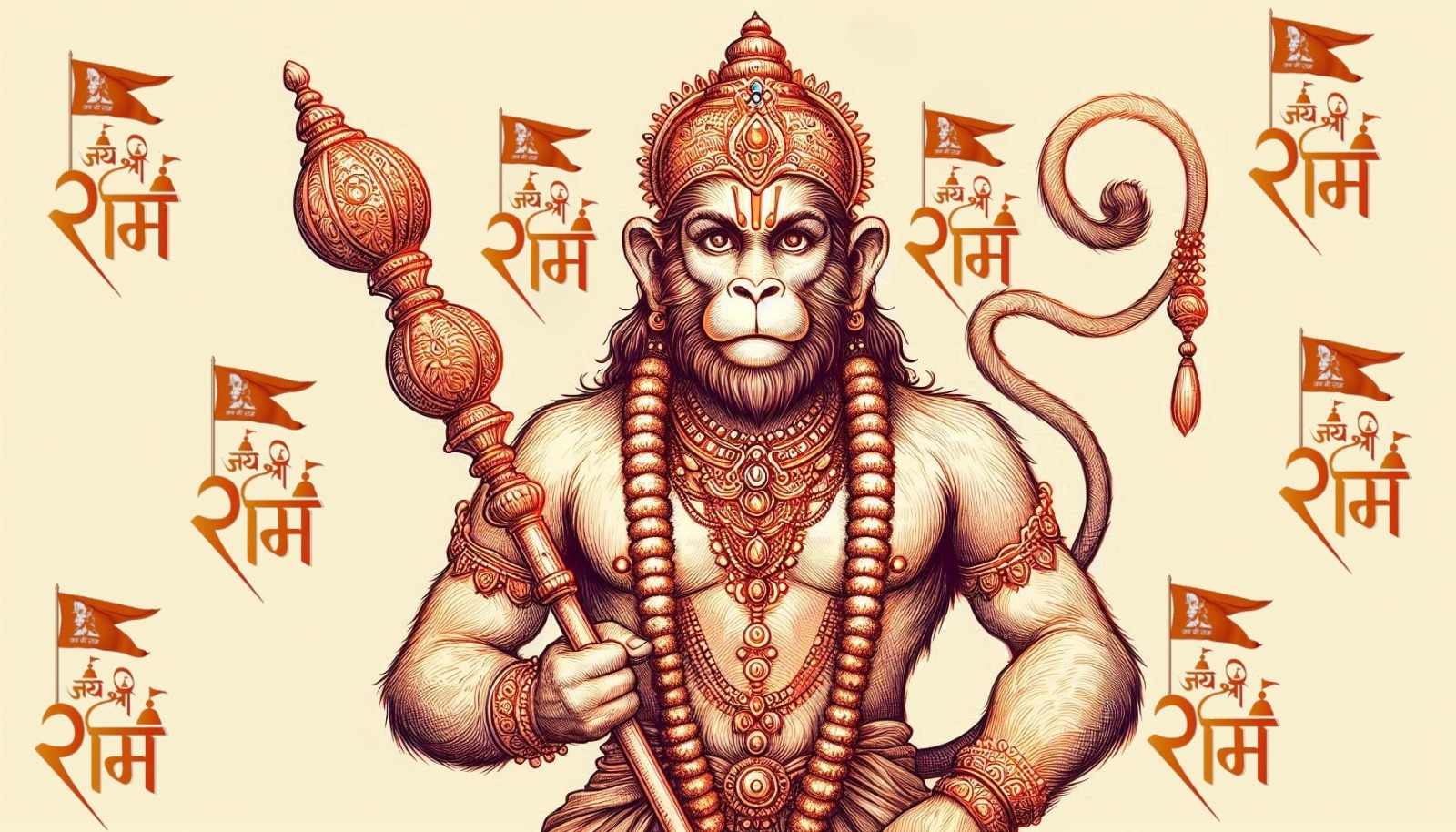
Vada Mala and Vada Archana Seva to Shri Hanuman. Book Vadamala Puja online
 Tuesday 29 September, 2026
Puja will be held at Shri Sankatahara Vinayaka Temple, Bangalore, and you can experience from your home!
Offer a Sacred Garland of 108 Vadas. Seek Relief from Rahu Dosha. Attain Ishtartha Siddhi.
Vada Mala Seva, also known as Vadamala Archana, Vade Mala Seva, Hanuman Vadamalai, or Anjaneyar Vadai Mala, is one of the most powerful and beloved offerings made to Shri Hanuman. A garland of freshly prepared urad dal vadas, seasoned with pepper and offered with complete devotion, is placed at the sacred feet of Bajrangbali. This offering is deeply rooted in Vedic and Puranic tradition and carries immense spiritual significance for devotees seeking relief from Rahu Dosha, fulfilment of deeply held desires, removal of life obstacles, and Bhagwan Hanuman's boundless anugraha.
At Jyotirgamaya, this seva is performed by experienced priests at a consecrated temple in Bangalore, with live streaming, a recorded video, and prasad delivery to your home. Whether you are in India or anywhere in the world, you can participate fully from the comfort of your home.
The vadas offered during your Vada Mala Seva are not discarded after the ritual. They are distributed as sacred Prasadam to devotees visiting the temple on the day of your seva. Every devotee who receives and partakes of this Prasadam becomes an unknowing participant in your act of offering, multiplying the punya generated by your seva manifold. This makes your Vada Mala Seva not just a personal act of devotion but a collective spiritual event, making it deeply phal-dayak and punya-dayak for you and your entire family.

Vedic Significance

Unlock Ishtartha Siddhi
Vada Mala Seva channels Shri Hanuman's grace to fulfil your most cherished Sankalpa, bringing clarity, strength, and divine support to your deepest goals.

Rahu Dosha Relief
Urad dal and pepper are Rahu's priya ingredients. Offering them as a Vada Mala to Bajrangbali pacifies Rahu Graha and shields the devotee from its malefic effects in the Janma Kundali.

Remove Obstacles
Shri Hanuman's anugraha dissolves obstacles in career, relationships, health, and spiritual progress, giving devotees the courage and clarity to move forward with confidence.

Protection and Peace
Bajrangbali is the supreme Rakshaka. This seva invites his divine shield around the devotee and their family, warding off negative energies and establishing Mangala and Shanti in the home.
Sevas we offer for Vada Mala Seva to Shri Hanuman
Divine Story, Benefits, and Sacred Sevas of this Auspicious Puja
What is Vada Mala Seva?
Vada Mala Seva is a sacred Vedic offering in which a garland of freshly prepared vadas is presented to Shri Hanuman as a form of devotional worship. The vadas used in this offering are made from urad dal, also called black gram, and are seasoned with black pepper. This combination of urad dal and pepper holds deep significance in Jyotisha Shastra, as both ingredients are associated with Rahu Graha. The offering therefore carries a dual purpose: it is an act of pure devotion to Shri Hanuman, and simultaneously a powerful remedy for the malefic effects of Rahu Dosha in a devotee's Janma Kundali.
The word "Vada" refers to the fried lentil fritter known across India by many regional names. In Tamil Nadu, this offering is called Vadai Malai or Anjaneyar Vadai. In Karnataka, it is called Uddina Vade or Vade Mala. In Andhra Pradesh and Telangana, it is known as Garelu. In Kerala, it is called Uzhunnu Vada or Medu Vada. In Maharashtra, it is referred to as Wada Mala or Wade Mala. Despite the many regional names, the essence of the offering remains the same across all traditions: a garland of urad dal vadas, shaped in a circle or bent like a serpent, offered to Shri Hanuman with complete Shraddha and Bhakti.
The garland itself, whether made of 16, 51, 108, or 1008 vadas, is strung together and placed around the neck of the Hanuman murti or at his sacred feet. The number 108 holds the highest significance in Vedic tradition, representing the 108 names of Bhagwan, the 108 beads of a Japa Mala, and the sacred geometry connecting the Sun, Moon, and Earth. Offering a garland of 108 vadas to Shri Hanuman is therefore considered a complete and wholesome act of devotion.
This seva is traditionally accompanied by Panchamrutha Abhisheka, Tulasi Pushpa Ashtottararchana involving the chanting of 108 names of Shri Hanuman, Naivedya, and Mangalarati. Together, these rituals form a complete puja that deepens the devotee's connection with Bajrangbali and invites his Shakti, protection, and grace into their life.
Vada Mala Seva is particularly recommended for devotees who are experiencing the effects of Rahu Mahadasha or Rahu Antardasha, those facing repeated obstacles in career, marriage, or health, those seeking fulfilment of a long-held Sankalpa or desire, and those wishing to express gratitude to Shri Hanuman for answered prayers.
The Sacred Story Behind Vada Mala: Rahu, Hanuman, and the Boon That Changed Everything
The origin of Vada Mala Seva is rooted in one of the most fascinating episodes from the Ramayana tradition and the Puranic accounts of Shri Hanuman's extraordinary life. To understand why a garland of urad dal vadas holds such immense power as an offering to Bajrangbali, one must go back to the events that unfolded in Lanka during Shri Hanuman's legendary mission to find Mata Sita.
Hanuman Enters Lanka and Confronts the Navagrahas
When Shri Hanuman leapt across the ocean and entered the kingdom of Ravana, he discovered that the Navagrahas, the nine planetary deities, were being held captive by Ravana inside his palace. Ravana, in his arrogance and desire to control the cosmic forces, had imprisoned the Navagrahas to bend fate itself in his favour. The planets, stripped of their freedom, were suffering under his tyranny.
Shri Hanuman, on his mission of dharma in service of Prabhu Rama, could not ignore this injustice. With his boundless strength and courage, he freed the Navagrahas from their captivity. All nine planetary deities, including Surya, Chandra, Mangala, Budha, Brihaspati, Shukra, Shani, Rahu, and Ketu, were liberated by the grace and might of Bajrangbali.
Rahu Grants a Boon to Shri Hanuman
Among the Navagrahas freed that day, Rahu was deeply moved by the valor and selfless action of Shri Hanuman. Rahu, the shadow planet known in Jyotisha Shastra as the north node of the Moon, is associated with urad dal, black gram, as his priya anna, his most favoured grain. Rahu is also symbolically represented in the form of a serpent, a circular or coiled form without a beginning or end.
In gratitude for his liberation, Rahu granted Shri Hanuman a powerful boon. He declared that any devotee who offers Shri Hanuman a food item prepared from urad dal, shaped in the form of a garland or coiled like a serpent, would receive his grace and protection. Rahu further declared that such a devotee would be freed from the malefic effects of Rahu Dosha in their Janma Kundali, and that Rahu Graha would not trouble them with obstacles, confusion, delays, or suffering.
This is the sacred origin of Vada Mala Seva. The vada, circular in shape like a serpent coiled upon itself, made from urad dal which is Rahu's priya grain, and offered as a continuous garland, embodies Rahu's own symbolic form. When offered to Shri Hanuman with devotion, it invokes both the anugraha of Bajrangbali and the pacification of Rahu Graha simultaneously.
The Deeper Meaning of the Offering
Beyond the mythological narrative, there is a profound spiritual teaching embedded in this tradition. Rahu in Jyotisha represents Maya, attachment, unfulfilled desires, fear, confusion, and the ego's grip on the human mind. When a devotee offers a Vada Mala to Shri Hanuman, they are symbolically offering their own fears, ego, attachments, and obstacles at the feet of Bajrangbali. Shri Hanuman, the greatest Bhakta of Prabhu Rama and the embodiment of Nishkama Seva, accepts this offering and transforms it into Shakti, clarity, and divine protection for the devotee.
Maha Periyava, the revered Jagadguru of Kanchi Kamakoti Peetham, is known to have spoken about the significance of Vada Mala Seva and its connection to Rahu. He explained that the tradition of offering urad dal preparations to Shri Hanuman is particularly strong in South India, where urad dal forms the foundation of many sacred food offerings. The Milagu Vadai, a pepper vada made from urad dal, is considered especially potent as a Rahu Dosha remedy when offered in the form of a garland to Anjaneyaswami.
Hanuman's Other Great Feats and Their Connection to This Seva
The Vada Mala Seva also draws from the broader narrative of Shri Hanuman's extraordinary devotion and capability. In the Valmiki Ramayana, Shri Hanuman is celebrated for lifting the Dronagiri mountain to bring the Sanjeevani herb that saved Lakshmana's life, crossing the ocean in a single leap to reach Lanka, burning Ravana's golden city with his tail, and carrying Prabhu Rama and Lakshmana on his shoulders. These feats represent Hanuman's infinite Shakti, his unwavering commitment to dharma, and his complete surrender to Prabhu Rama.
When devotees offer Vada Mala to such a Mahavira, they are not merely performing a ritual. They are reaching out to a divine presence who has the power to lift the heaviest burdens, cross the widest obstacles, and bring the healing grace of Prabhu Rama into the devotee's life. The Vada Mala is the devotee's humble expression of surrender, and Shri Hanuman's anugraha is the divine response to that surrender.
Benefits of Vada Mala Seva to Shri Hanuman
Vada Mala Seva is not a simple ritual offering. It is a complete spiritual act that works simultaneously on the devotee's astrological chart, their mental and emotional state, and their karmic journey. The benefits of this seva, as understood through Vedic Jyotisha, Puranic tradition, and centuries of lived devotional experience, span every important area of a devotee's life.
Devotees who perform Vada Mala Seva regularly or at important astrological junctures have experienced relief from long-standing Rahu Dosha effects such as career instability, repeated failures, unexplained fear, confusion in decision making, delays in marriage, and health issues with no clear cause. Beyond Rahu Dosha relief, this seva is a direct channel to Shri Hanuman's boundless Shakti and anugraha.
The Skanda Purana and various Hanuman Upasana texts affirm that Shri Hanuman, as the Ashta Siddhi and Nava Nidhi data, the one who bestows eight supernatural powers and nine forms of wealth, responds swiftly and completely to sincere devotional offerings. The Vada Mala, being the most beloved Naivedya of Bajrangbali rooted in the boon granted by Rahu himself, is among the most potent sevas a devotee can perform.
- Relief from Rahu Mahadasha and Rahu Antardasha: Rahu Mahadasha lasts eighteen years in the Vimshottari Dasha system. During this period, a person may experience confusion, misdirection, sudden reversals of fortune, strained relationships, and a general sense of being lost. Rahu Antardasha within other Mahadashas can produce similar effects in shorter bursts. Vada Mala Seva to Shri Hanuman is one of the most highly recommended remedies during these periods. The offering directly addresses Rahu's symbolic and astrological nature while simultaneously invoking the protective grace of Hanuman, who governs and pacifies all Navagrahas.
- Relief from Rahu Ketu Dosha: When Rahu and Ketu occupy sensitive positions in a Janma Kundali, particularly on the Lagna, Chandra, or in Kendra and Trikona houses, the effects can be deeply disruptive. Vada Mala Seva, combined with sincere Hanuman Upasana and Hanuman Chalisa recitation, is prescribed in traditional Jyotisha as a graha shanti measure for Rahu Ketu Dosha.
- Fulfilment of Long Held Desires: The Ramayana describes Shri Hanuman as Kama Roopa, one who can take any form and fulfil any genuine desire of his devotees. Devotees who perform Vada Mala Seva with a clear Sankalpa, a declared intention, have experienced fulfilment in areas including marriage, childbirth, career success, legal resolution, financial recovery, and restoration of health. The seva acts as a bridge between the devotee's sincere aspiration and Bhagwan's infinite grace.
- Strength, Courage, and Mental Clarity: Shri Hanuman is Mahavira, the great hero. He is Buddhi Mata, the one who grants sharp intellect and sound judgment. Devotees who are facing situations requiring extraordinary courage, whether in professional life, personal challenges, or spiritual sadhana, find that regular Hanuman Upasana and Vada Mala Seva fills them with an inner strength that is beyond ordinary human capacity. This is the Shakti of Bajrangbali flowing directly into the devotee's life through the medium of sincere bhakti.
- Warding Off Negative Energies: In both Puranic and folk traditions across South and North India, Shri Hanuman is regarded as the supreme protector against negative forces, evil eye, black energy, and spiritual obstruction. The Vada Mala Seva, performed with proper Vedic procedure including Abhisheka, Ashtottararchana, and Mangalarati, creates a powerful field of divine protection around the devotee and their household.
It is also worth noting that Vada Mala Seva becomes even more effective when combined with Vada Archana, the ritual offering of individual vadas at the feet of Shri Hanuman accompanied by the chanting of each of his divine names. While Vada Mala Seva involves the offering of a complete garland, Vada Archana adds a layer of nama-based devotion where each vada is presented with a specific name of Bajrangbali. Together, these two forms of offering create a multi-layered act of worship that addresses Rahu Dosha from both the naivedya dimension and the nama-archana dimension simultaneously. Devotees who perform both sevas together have reported significantly accelerated relief from Rahu Mahadasha effects, making this combination one of the most effective Rahu Dosha remedies available in living Vedic temple tradition.
Vada Mala Across India: One Offering, Many Sacred Names
One of the most beautiful aspects of Vada Mala Seva is how deeply it has taken root across every corner of India. From the ancient Anjaneyaswami temples of Tamil Nadu to the Hanuman mandirs of Maharashtra, from the Anjaneya shrines of Karnataka to the Panchamukha Hanuman temples of Andhra Pradesh and Telangana, this offering transcends linguistic and regional boundaries. The vada changes its name, sometimes its size, and occasionally its seasoning, but its essence remains unchanged: urad dal shaped with devotion, offered to Bajrangbali with Shraddha.
Understanding the regional names of this offering helps devotees from every background connect with the tradition as it exists in their own culture and language. It also helps clarify that Vadamala, Vadai Malai, Vade Mala, Wada Mala, Garelu Mala, and Uzhunnu Vada Mala are all names for the same sacred Naivedya offered to Shri Hanuman.
- Tamil Nadu: Anjaneyar Vadai and Ulundhu Vadai Malai: In Tamil Nadu, this offering is most commonly called Vadai Malai or Anjaneyar Vadai. The term Anjaneyar is the Tamil name for Shri Hanuman, derived from Anjana, the name of his mother. The vadas prepared in Tamil Nadu are typically made from soaked and ground urad dal, seasoned generously with black pepper, known as Milagu in Tamil. This is why the offering is also called Milagu Vadai, the pepper vada. The Ulundhu Vadai, urad dal vada, is the specific variety used for this offering. Ulundhu is the Tamil word for urad dal, and Ulundhu Vadai Archana is a commonly used term in Tamil Nadu temples when devotees book this seva formally. The garland of vadas is strung together and offered to Anjaneyaswami, often on Tuesdays and Saturdays, which are the most auspicious days for Hanuman worship. In many Tamil Nadu temples, Tuesday Anjaneyar Vada Malai is a highly sought after seva, with devotees booking weeks in advance. The tradition in Tamil Nadu also connects directly to the teachings of Maha Periyava of Kanchi Kamakoti Peetham, who emphasised the spiritual and astrological significance of offering Milagu Vadai to Anjaneyaswami as a Rahu Dosha remedy.
- Karnataka: Uddina Vade and Vade Mala Seva: In Karnataka, urad dal is called Uddina Bele, and the vada prepared from it is called Uddina Vade. The garland offering is therefore known as Vade Mala or Uddina Vade Mala. Kannada devotees also use the spelling Vademala or Vadamala interchangeably when referring to this seva. Karnataka has a rich tradition of Hanuman worship, with the state being home to the Anjaneya Swami temple at Hampi, believed to be located near the legendary Kishkindha, the kingdom of Sugriva where Shri Hanuman and Prabhu Rama first met. For Karnataka devotees, Vade Mala Seva carries a particularly deep cultural resonance connected to this geography and its association with the Ramayana narrative. In Bangalore, where Jyotirgamaya conducts this seva, Vade Mala and Vadamala are the most commonly used terms. Saturday Hanuman Vada Mala Seva is especially popular among Bangalore devotees, as Saturday is considered highly auspicious for pacifying both Shani and Rahu through Hanuman worship.
- Andhra Pradesh and Telangana: Garelu and Garelu Mala: In Telugu-speaking states, urad dal vadas are called Garelu. The Garelu are prepared specifically for Hanuman offerings during important festival days and auspicious occasions. In Andhra Pradesh and Telangana, Hanuman temples conduct Garelu Mala sevas on Tuesdays, Saturdays, and on Hanuman Jayanti. The Panchamukha Hanuman form, worshipped widely in Telugu states, is also associated with Vada Mala offerings. The Panchamukha Vada Mala, a garland of vadas offered specifically to the five-faced form of Shri Hanuman, is considered especially potent for removing obstacles and granting protection.
- Kerala: Uzhunnu Vada and Medu Vada Seva: In Kerala, urad dal is called Uzhunnu, and the vada prepared from it is called Uzhunnu Vada. This is the same as what is called Medu Vada in many parts of India, a soft, fluffy vada with a crisp outer layer, made from ground urad dal batter. Kerala Hanuman temples, particularly those associated with the Datta tradition, perform Uzhunnu Vada Mala sevas for devotees seeking relief from Rahu Dosha and Naga Dosha.
- Maharashtra: Wada Mala and Wade Mala Seva: In Maharashtra, the offering is called Wada Mala or Wade Mala. The spelling variations Wadamala and Wademala are also used. Maharashtra has a strong Maruti, the Marathi name for Hanuman, worship tradition, and Wada Mala Seva is performed in Maruti mandirs across the state, particularly on Saturdays and during Hanuman Jayanti.
- North India: Vada Garland Offering and Hanuman Vada Mala: In North India, where Hindi is the primary language, the offering is generally referred to as Vada Mala or Hanuman Vada Mala. The term vada garland offering is used by English-speaking urban and NRI devotees who may not be familiar with the regional names but are seeking this specific type of Hanuman seva. The tradition of offering urad dal preparations to Shri Hanuman on Tuesdays and Saturdays is observed across Hanuman temples in Delhi, Varanasi, Ayodhya, and other North Indian pilgrimage centres.
- Moolam Nakshatram and Vada Mala: In South Indian temple tradition, Moolam Nakshatram, the lunar asterism ruled by Ketu, is considered an auspicious day for Hanuman worship and Vada Mala offerings. Since Rahu and Ketu are paired shadow planets in Jyotisha, propitiating Shri Hanuman on Moolam Nakshatram days is believed to address both Rahu and Ketu related challenges simultaneously. Devotees with Ketu placements causing disturbance in their Janma Kundali may specifically seek out Vada Mala Seva on Moolam Nakshatram days.
How Many Vadas in a Vada Mala? Understanding the Sacred Counts
One of the most common questions devotees ask when planning a Vada Mala Seva is about the number of vadas in the garland. Is 8 enough? Is 108 necessary? What is the significance of 1008? The answers to these questions come from Vedic numerical symbolism, temple tradition, and the specific intention or Sankalpa behind the offering. There is no single correct count that applies to every devotee in every situation. What matters is the sincerity of the offering and the clarity of the Sankalpa held in the heart.
That said, each count carries its own traditional significance, and understanding these helps a devotee choose the offering that best aligns with their spiritual need and the depth of their Sankalpa.
- 8 Vadas: The Ashta Vada Offering: The number 8 in Vedic tradition represents the Ashta Dikpalas, the eight guardians of the eight directions, and the Ashta Siddhis, the eight supernatural powers attributed to Shri Hanuman in the Hanuman Chalisa. An offering of 8 vadas is a simple, humble act of devotion, typically performed as a daily or weekly personal offering by devotees who maintain a home Hanuman puja. It is not typically the count used in formal temple sevas but holds personal devotional significance.
- 16 Vadas: The Shodasha Upachara Count: The number 16 corresponds to the Shodasha Upacharas, the sixteen traditional offerings made during formal Vedic worship. These sixteen services, which include Avahana, Asana, Padya, Arghya, Achamana, Snana, Vastra, Abharana, Gandha, Pushpa, Dhupa, Deepa, Naivedya, Tambula, Pradakshina, and Namaskara, represent a complete act of devotional hospitality to the deity. An offering of 16 vadas therefore carries the symbolic weight of a complete, wholesome act of worship presented to Shri Hanuman.
- 51 Vadas: The Shakti Count: The number 51 holds special significance in Shakta and Vaishnava traditions alike. It corresponds to the 51 Shakti Peethas, the sacred seats of Adi Shakti spread across the Indian subcontinent, and also to the 51 letters of the Sanskrit alphabet, the Varna Mala, which is considered the root of all Vedic knowledge and mantra. Offering 51 vadas to Shri Hanuman is considered a powerful act, particularly for devotees seeking Shakti, strength, courage, and the ability to overcome a specific significant challenge in life. This count is commonly used in Maharashtra and parts of Karnataka.
- 108 Vadas: The Most Sacred and Complete Offering: The number 108 is the most sacred count in all of Vedic tradition. It appears across every dimension of Vedic knowledge and practice. There are 108 Upanishads, 108 beads on a Japa Mala, 108 names in every Ashtottarashata Namavali, 108 Divya Desams of Vishnu worship, and 108 sacred Shiva Kshetras. In Vedic astronomy, the diameter of the Sun is approximately 108 times the diameter of the Earth, and the distance between the Earth and the Sun is approximately 108 times the diameter of the Sun. This same ratio holds for the Moon. The number 108 therefore represents cosmic completeness, the total integration of the individual soul with the universal divine. Offering a garland of 108 vadas to Shri Hanuman is the most widely performed and most highly recommended form of Vada Mala Seva. It is the standard count used in formal temple sevas across India and is the count used in the Jyotirgamaya Vada Mala Seva. The 108 Vada Mala is accompanied by Ashtottarashata Namavali Archana, the chanting of 108 names of Shri Hanuman, creating a perfect alignment between the number of vadas offered and the number of divine names chanted. This alignment is considered spiritually potent and is believed to draw the full attention and anugraha of Bajrangbali toward the devotee's Sankalpa. Devotees suffering from Rahu Mahadasha, Rahu Antardasha, Rahu Ketu Dosha, or any significant life obstacle are most commonly advised by Jyotishacharyas to perform the 108 Vada Mala Seva.
- 1008 Vadas: The Sahasra Offering for Extraordinary Sankalpa: The number 1008 represents the Sahasra Nama, the thousand and eight names of Bhagwan, used in the highest forms of Vedic worship. A Sahasranama Archana, the chanting of 1000 divine names, is considered the most elaborate and powerful form of name-based worship in the Vedic tradition. Offering 1008 vadas to Shri Hanuman is therefore the most intensive and complete form of Vada Mala Seva, reserved for extraordinary Sankalpas, deep karmic challenges, or as an expression of supreme gratitude for a major grace received. The 1008 Vada Mala Seva is performed on very special occasions, including Hanuman Jayanti, important astrological junctures such as Rahu Kala on a Saturday coinciding with a significant Nakshatra, or when a devotee has made a major vow to Shri Hanuman and is fulfilling it. This seva requires significant preparation, a large team of experienced priests, and a full day of ritual observance. It is a deeply moving and transformative spiritual experience for all who witness or participate in it.
Choosing the Right Count for Your Seva
For most devotees seeking relief from Rahu Dosha, Ishtartha Siddhi, or Vighna Nivarana, the 108 Vada Mala Seva is the most appropriate and complete choice. It balances devotional depth, ritual completeness, and practical accessibility. The Jyotirgamaya Vada Mala Seva is conducted with 108 vadas, accompanied by Abhisheka, Ashtottararchana, and Mangalarati, making it a full and spiritually complete act of Hanuman worship.
If you are unsure which count is right for your specific Sankalpa or astrological situation, our team is happy to guide you. You may reach us directly on before completing your booking.
Watch a past recording of this Puja
Why attend puja online with us?
In the spiritual realm, physical boundaries hold no power, ensuring a connection between you and the divine.

Live Ritual Viewing
Experience the spiritual essence from the comfort of your home by tuning into live streams of the rituals performed by experienced priests.

Recorded Ceremony Video
If you miss the live event, a recorded video will be provided, allowing you to watch the sacred rituals at your convenience.

Free Prasad Delivery
Receive blessed prasad delivered directly to your home, ensuring you remain connected to the divine blessings.

Convenience
Participate in the rituals remotely without the need to visit the temple.

Spiritual Connection
Stay spiritually connected through live and recorded rituals, with blessings brought to you through prasad delivery.
How to book Vada Mala Seva to Shri Hanuman puja
1
Choose your seva
Select one or more main rituals as per your spiritual need.
2
Choose offerings
Add optional offerings to deepen your spiritual experience.

3
Complete your booking
Confirm securely so all selected rituals and offerings are included.
Click Here To Book Puja
Frequently Asked Questions About Vada Mala Seva
Q: What is Vada Mala Seva and why is it offered to Shri Hanuman?
A: Vada Mala Seva is a sacred Vedic offering in which a garland of freshly prepared urad dal vadas, seasoned with black pepper, is presented to Shri Hanuman as an act of devotion. It is offered to Bajrangbali because of a divine boon granted by Rahu Graha, who declared that any devotee offering urad dal preparations shaped like a garland or serpent to Shri Hanuman would receive relief from Rahu Dosha and the fulfilment of their sincere desires. Urad dal and black pepper are both associated with Rahu in Jyotisha Shastra, making this offering uniquely powerful for Rahu Dosha Nivarana.
Q: What is the story of Rahu granting a boon connected to Vada Mala?
A: During Shri Hanuman's mission to Lanka in search of Mata Sita, he discovered that Ravana had imprisoned the Navagrahas inside his palace. Shri Hanuman freed all nine planetary deities, including Rahu. Deeply moved by Bajrangbali's valor and selfless action, Rahu granted him a boon: any devotee who offers Shri Hanuman a food item made from urad dal, Rahu's priya grain, shaped like a garland or coiled serpent, would be freed from the malefic effects of Rahu Dosha. This is the Puranic origin of Vada Mala Seva and the reason it remains one of the most powerful Rahu Dosha remedies in Vedic tradition.
Q: Does Vada Mala Seva help with Rahu Dosha and Rahu Mahadasha?
A: Yes. Vada Mala Seva is one of the most highly recommended remedies for Rahu Dosha in traditional Jyotisha. The offering directly addresses Rahu's symbolic and astrological nature through the use of urad dal and black pepper, both of which are associated with Rahu Graha. When offered to Shri Hanuman with sincere Shraddha and a clear Sankalpa, this seva is believed to pacify Rahu's malefic effects, reduce the intensity of Rahu Mahadasha and Rahu Antardasha, and bring greater clarity, stability, and protection into the devotee's life. It is also recommended for Rahu Ketu Dosha when both shadow planets are causing disturbance in the Janma Kundali.
Q: How many vadas are offered in Vada Mala Seva? What is the difference between 8, 16, 51, 108, and 1008 vadas?
A: Each count carries its own traditional significance. 8 vadas represent the Ashta Siddhis of Shri Hanuman and are used for simple personal devotional offerings. 16 vadas correspond to the Shodasha Upacharas, the sixteen services of complete Vedic worship. 51 vadas represent the 51 Shakti Peethas and are used for offerings seeking strength and courage. 108 vadas is the most sacred and complete count, representing cosmic completeness in Vedic tradition, and is the standard count for formal Vada Mala Seva in temples. 1008 vadas represent the Sahasra Nama and are reserved for extraordinary Sankalpas, major vow fulfilments, and special occasions such as Hanuman Jayanti. The Jyotirgamaya Vada Mala Seva is conducted with 108 vadas.
Q: What is the difference between Vadamala, Vadai Malai, Vade Mala, Wada Mala, Garelu Mala, and Uzhunnu Vada Mala?
A: These are all regional names for the same sacred offering to Shri Hanuman. Vadai Malai and Anjaneyar Vadai are the Tamil names used in Tamil Nadu. Ulundhu Vadai Archana is the formal temple booking term in Tamil Nadu. Milagu Vadai refers specifically to the pepper vada variety. Uddina Vade or Vade Mala is the Kannada name used in Karnataka. Garelu or Garelu Mala is the Telugu name used in Andhra Pradesh and Telangana. Uzhunnu Vada or Medu Vada Mala is the Malayalam name used in Kerala. Wada Mala or Wade Mala is the Marathi name used in Maharashtra. In North India and among NRI communities, it is generally called Vada Mala, Vadamala, or Hanuman Vada Garland offering. All of these refer to the same urad dal vada garland offered to Bajrangbali.
Q: Which days are most auspicious for Vada Mala Seva to Shri Hanuman?
A: Tuesday and Saturday are the most auspicious days for Hanuman worship and Vada Mala Seva. Tuesday is traditionally associated with Mangala and is considered Hanuman's primary weekday. Saturday is associated with Shani and Rahu, making it especially powerful for performing Vada Mala Seva as a Rahu Dosha remedy. Many South Indian temples conduct Tuesday Anjaneyar Vada Malai and Saturday Hanuman Vada Mala Seva as fixed weekly offerings. Moolam Nakshatram days are also considered auspicious for this seva, particularly for devotees with Rahu Ketu Dosha in their Janma Kundali.
Q: Can I book Vada Mala Seva online and receive prasad at home?
A: Yes. Jyotirgamaya offers complete online booking for Vada Mala Seva. After booking, the seva is performed by experienced priests at a consecrated Hanuman temple in Bangalore on the scheduled date. You will receive a live streaming link to watch the puja in real time, a recorded video of the full seva if you miss the live stream, and prasad delivered directly to your home. This allows devotees across India and worldwide to participate fully in this sacred seva without needing to travel to Bangalore.
Q: What rituals are included in the Jyotirgamaya Vada Mala Seva?
A: The Jyotirgamaya Vada Mala Seva includes Panchamrutha Abhisheka performed with Vedic hymns and mantras to Shri Hanuman, offering of a freshly prepared Vada Mala of 108 urad dal vadas, Tulasi Pushpa Ashtottararchana with the chanting of 108 names of Shri Hanuman, Naivedya offering, and Mangalarati to conclude the puja. Optional additions include Phala Arpanam, a basket of seasonal fruits offered on behalf of the devotee, and Madhu Arpanam, a pure honey offering symbolising the sweetness of devotion and the gentleness of Shri Hanuman's grace.
Q: Is Vada Mala Seva only for people with Rahu Dosha?
A: No. While Vada Mala Seva is particularly powerful for devotees with Rahu Dosha, Rahu Mahadasha, or Rahu Ketu Dosha in their Janma Kundali, it is open to every devotee of Shri Hanuman. Devotees seek this seva for a wide range of reasons including fulfilment of a long-held Sankalpa, gratitude for a prayer answered, seeking strength and courage during a difficult period, removing obstacles in career or marriage, and simply as an act of deep devotion to Bajrangbali. Shri Hanuman's anugraha is not limited to those with astrological doshas. His grace flows to every sincere devotee who approaches him with Shraddha and Bhakti.
Q: What is the price or cost of Vada Mala Seva at Jyotirgamaya?
A: Jyotirgamaya offers four seva tiers for Shri Hanuman worship, designed to suit every devotee's Sankalpa, budget, and level of offering. All four sevas include a Live Puja Experience, Puja Recording, Free Prasadam Delivery, and Sankalpa taken for the Karta and family.
- Shri Hanuman Abhishta Seva at Rs. 701: This seva includes a Vishesha Hanuman Abhishta Samarpan with Tulasi Haar, Honey, Banana, Pomegranate fruits, and Sindoor offering to Shri Hanuman.
- Shri Hanuman Vada Mala Seva with 54 Vadas at Rs. 751: This seva includes Vadamala Samarpan of 54 freshly prepared vadas, Tulasi Pushpa Archana, Naivedya, and Mangalarati.
- Shri Hanuman Vada Mala Seva with 108 Vadas at Rs. 1501: This is the most complete and widely chosen Vada Mala Seva. It includes Vadamala Samarpan of 108 freshly prepared vadas, Tulasi Pushpa Archana, Naivedya, and Mangalarati. The count of 108 aligns with the sacred Ashtottarashata tradition and is the standard recommendation for Rahu Dosha Nivarana and Ishtartha Siddhi.
- Shri Hanuman Sarva Seva at Rs. 1901: This is the most elaborate offering available. It includes Panchamrutha Abhisheka, Vadamala Samarpan of 108 freshly prepared vadas, Tulasi Pushpa Archana, Naivedya, and Mangalarati. This seva is recommended for devotees seeking the most complete and intensive form of Hanuman worship.
- Shri Hanuman Vada Archana with 108 Vadas at Rs. 2999: This is the most intensive and spiritually layered seva in the Jyotirgamaya Hanuman worship offering. It includes Vada Archana with 108 individual vadas offered one by one at the sacred feet of Shri Hanuman, each accompanied by a divine name from his Ashtottarashata Namavali, along with Tulasi Pushpa Archana, Naivedya, and Mangalarati. This seva combines the power of Vada Mala offering with nama-based archana, creating a multi-layered act of worship that addresses Rahu Dosha from both the naivedya dimension and the nama-archana dimension simultaneously. It is the highest recommended seva for devotees seeking accelerated relief from Rahu Mahadasha and deep Ishtartha Siddhi.
For any questions about which seva is best suited for your specific Sankalpa or astrological situation, you may reach our team before completing your booking.
Please note: The temple mentioned above may change based on certain on-ground dynamics. However, please be assured that the puja will definitely be conducted in an appropriate temple without any compromise.
Upcoming dates for Same Puja
15 July 2026
20 August 2026
18 September 2026