Benaka Amavasya (Shravana Amavasya) Puja and Homa
 Friday 11 September, 2026
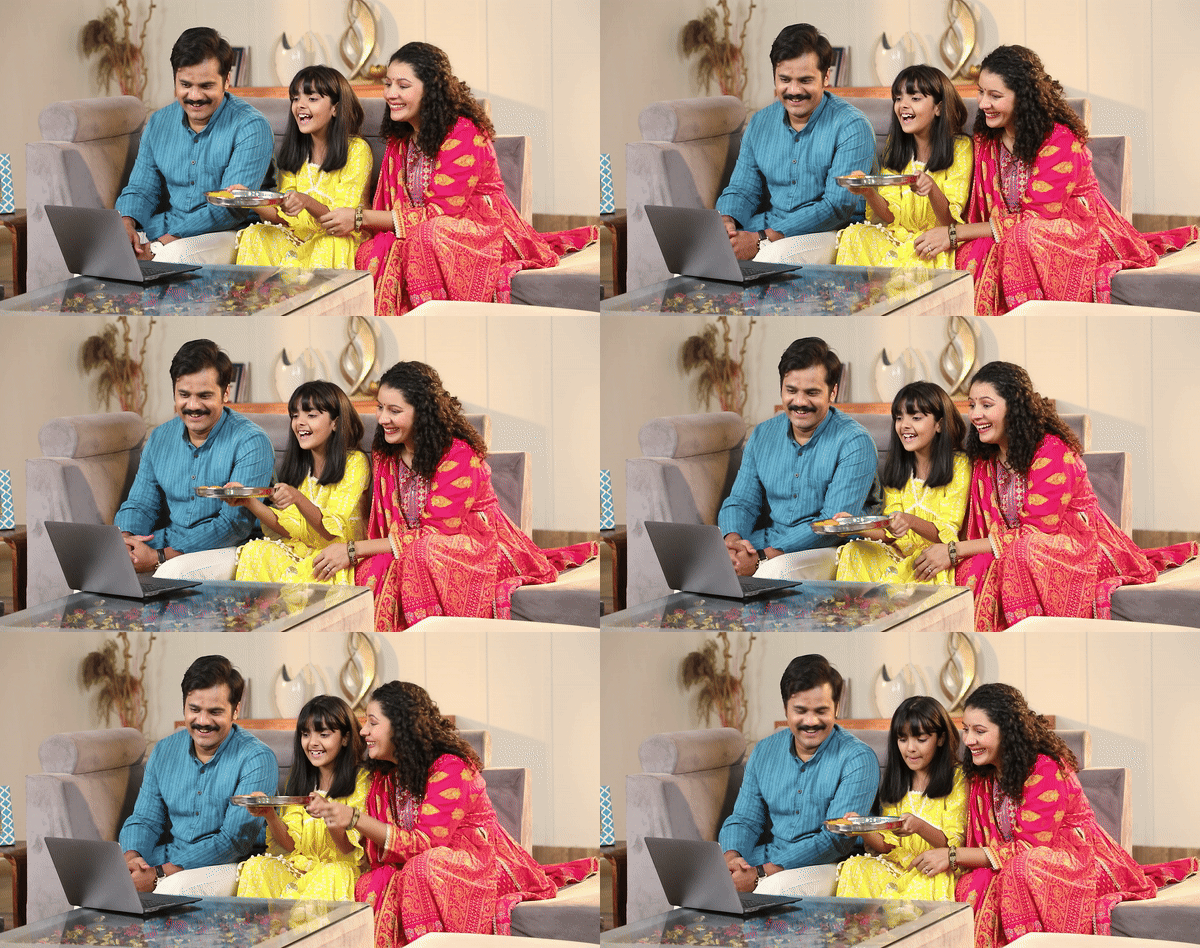
Puja will be held at sacred temple, and you can experience from your home!
Benaka Amavasya, widely known as Shravana Amavasya and Hariyali Amavasya, falls on Friday, 11 September 2026 as per the Kannada, Marathi, Telugu and Gujarati Amanta panchang. This new moon in the holy Shravan masa is considered one of the most powerful days of the year for Pitru Tarpan, Shiva sadhana and Navagraha Shanti karma. Jyotirgamaya brings you authentic Vedic sevas for Benaka Amavasya, performed by qualified purohits and available for booking online from anywhere in the world, including NRI sevakarthas.
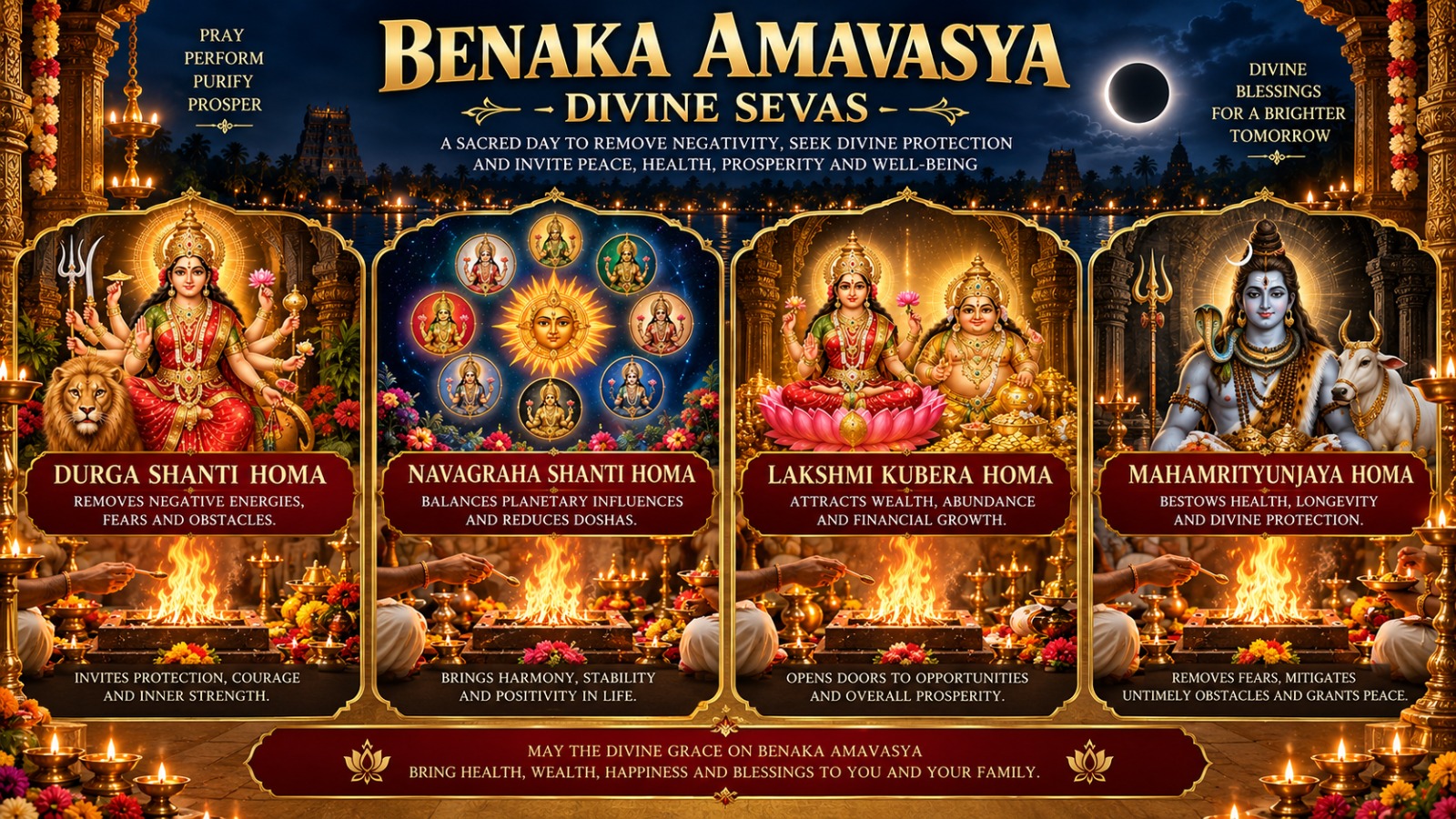
- Navagraha Shanti Homa: Calms the nine planets and helps overcome obstacles caused by weak or afflicted grahas in the birth chart, with the powerful energy of Benaka Amavasya adding spiritual significance to the Homa.
- Maha Mrityunjaya Homam: Invokes Bhagwan Shiva for health, protection from untimely difficulties and long life for the sevakartha and family.
- Durga Shanti Homa: Invokes Durga Devi for strength, protection and removal of negative influences, with an energized Yantra given to the sevakartha.
- Lakshmi Kubera Homam: Invokes Mahalakshmi and Kubera for wealth, financial stability and business success, with an energized coin given to the sevakartha.

Vedic Significance

Ancestor Blessing
Amavasya is the tithi most suited for Pitru Tarpan. Offerings made on Benaka Amavasya are believed to reach the pitrus directly and bring peace to the family line.

Shiva Puja in Shravan
Shravan masa is held sacred to Bhagwan Shiva. Amavasya falling in this month is considered a rare window for Rudra puja and Maha Mrityunjaya sadhana.

Nature and Tree Puja
This Amavasya is also called Hariyali Amavasya. Planting trees and worshipping the Peepal and Vata trees on this day is said to bring long life and prosperity to the family.

Navagraha Peace
On Amavasya, Surya and Chandra sit in the same rashi. This conjunction is used in Jyotish for Navagraha Shanti karma to calm planetary doshas.
Sevas we offer for Benaka Amavasya Puja
Divine Story, Benefits, and Sacred Sevas of this Auspicious Puja
What is Benaka Amavasya
Benaka Amavasya is the Kannada name used in Karnataka for the Amavasya (no moon day) that falls in the sacred month of Shravan. On this tithi, Surya and Chandra come together in the same rashi, and the moon disappears completely from the sky. In 2026, Benaka Amavasya falls on Friday, 11 September, as per the Kannada, Marathi, Telugu and Gujarati Amanta panchang. The same tithi falls on 12 August 2026 in the North Indian Purnimanta calendar, where it is called Hariyali Amavasya. Both dates mark the same auspicious occasion; only the calendar reckoning differs by region.
This day is known by several names across India:
- Benaka Amavasya, the Kannada name used in Karnataka, connected to temple traditions such as the Kumbhabhisheka performed at Male Mahadeshwara Betta.
- Shravana Amavasya or Shravani Amavasya, referring to the Shravan masa in which it falls.
- Hariyali Amavasya, celebrated in North India with tree planting to mark the arrival of greenery in the monsoon season.
- Pithori Amavasya, observed in Maharashtra and Gujarat, when mothers pray for the wellbeing of their children.
- Polala Amavasya, its name in Andhra Pradesh.
Every Amavasya is regarded in Jyotish and Vedic tradition as the most suitable day for Pitru Tarpan, since the pitrus are believed to be closest to the earthly realm when the moon is dark. Shravan masa itself is dear to Bhagwan Shiva, so an Amavasya within this month carries the combined significance of pitru shanti and Shiva sadhana. This is also why Navagraha Shanti, Maha Mrityunjaya, Durga Shanti and Lakshmi Kubera homas are considered especially fruitful when performed on Benaka Amavasya.
Quick facts about Benaka Amavasya 2026:
- Date (Amanta calendar, Karnataka, Maharashtra, Telangana, Gujarat): Friday, 11 September 2026
- Date (Purnimanta calendar, North India): Tuesday, 12 August 2026
- Tithi: Amavasya, Krishna Paksha, Shravan masa
- Also known as: Shravana Amavasya, Hariyali Amavasya, Pithori Amavasya, Polala Amavasya
- Presiding focus: Pitru devatas, Bhagwan Shiva, Navagrahas
- Main practices: Pitru Tarpan, Homa, tree worship, charity
Scriptural References
The importance of Amavasya for pitru rituals is described in the Garuda Purana, where Bhagwan Yama explains to Yudhishthira that ancestors who do not receive proper offerings remain unsatisfied, while those honoured through Shraddha and Tarpan attain peace. The Skanda Purana speaks of the merit of worship and charity performed during Shravan masa, dedicated to Bhagwan Shiva. The glory of Devi worship connected to this period is found in the Devi Bhagavata Purana. For the Navagraha Shanti aspect of this puja, the remedial value of planetary worship is drawn from the Brihat Parashara Hora Shastra, the foundational text of Vedic astrology.
The Mahabharata also carries a well known itihasa about Karna, who after death received gold instead of food in the afterlife, because he had donated wealth throughout his life but never performed Tarpan for his ancestors. While this story is best known in connection with Pitru Paksha, it captures a teaching that applies to every Amavasya, including Benaka Amavasya, on why ancestor offerings matter regardless of one's other good deeds.
Sevas We Offer in Detail
- Navagraha Shanti Homa: This seva includes Ganapati Sthapana, Punyaha Vachanam, Kalasa Pooja, chanting of mantras dedicated to each of the nine grahas, offerings to the Navagrahas, Aavurthi and Poornahuti, followed by Prasad distribution and ritual offerings. It can also be performed on an individual basis on Benaka Amavasya, a powerful and high energy day, seeking blessings for planetary harmony, balance, prosperity, and removal of obstacles associated with the Navagrahas.
- Maha Mrityunjaya Homam: This seva includes Vedic rituals dedicated to Shri Shiva, beginning with Ganapati Puja, followed by chanting of the Maha Mrityunjaya Mantra as Sahasra Jaap, with a total of 1008 repetitions. It can also be performed on an individual basis on Benaka Amavasya, a powerful and high energy day, seeking blessings for good health, healing, longevity, and overall well being.
- Durga Shanti Homa: This seva is a sacred fire ritual dedicated to Durga Devi, symbolising power, strength, and protection. It can be performed on an individual basis on Benaka Amavasya, a powerful and high energy day, seeking blessings for strength, protection, peace, and removal of obstacles. The sevakartha also receives an Energized Yantra as part of this seva.
- Lakshmi Kubera Homam: This seva invokes the blessings of Mata Mahalaxmi and Shri Kubera to attract wealth, success, and financial stability. It can be performed on an individual basis on Benaka Amavasya, a powerful and high energy day, seeking blessings for wealth, prosperity, abundance, and financial well being. The sevakartha also receives an Energized Coin as part of this seva.
Sevakarthas may choose one seva or a combination, depending on the specific blessings they are seeking. Our purohits can guide you in selecting the right seva after understanding your birth chart and current concerns.
Puja and Homa Process (Vidhi)
- Sankalp: The purohit begins with a sankalp, stating the sevakartha's name, gotra, nakshatra and the specific intent of the puja.
- Ganapati Puja: Bhagwan Ganesha is worshipped first to remove obstacles and ensure the smooth completion of the ritual.
- Punyaha Vachanam and Kalasa Pooja: The kalasa is set up and purified water is prepared, which is used to sanctify the puja space and the sevakartha.
- Main Mantra Chanting: Depending on the seva chosen, the purohit chants the Navagraha mantras, the Maha Mrityunjaya mantra, Durga mantras or Lakshmi Kubera mantras, as prescribed for that homa.
- Havan and Offerings: Ghee, herbs and sacred items are offered into the homa agni along with the mantra chanting, culminating in Aavurthi.
- Poornahuti: The final and most important offering is made into the fire, marking the completion of the homa.
- Naivedya and Aarti: Prasad is offered to the presiding devata, followed by Aarti and prayers for the wellbeing of the sevakartha and family.
- Prasad Distribution: Blessed prasad, and where applicable the Energized Yantra or Energized Coin, is sent to the sevakartha.
Benefits of Benaka Amavasya Puja
- Relief from Pitru Dosha: Offerings made on this Amavasya are believed to bring peace to ancestors and ease difficulties linked to pitru dosha.
- Health and Longevity: The Maha Mrityunjaya Homam is associated with protection from illness and untimely troubles.
- Strength and Protection: The Durga Shanti Homa is believed to guard the sevakartha and family from negative influences.
- Wealth and Stability: The Lakshmi Kubera Homam is associated with financial growth and business success.
- Planetary Peace: The Navagraha Shanti Homa is believed to reduce the malefic effects of afflicted grahas in the birth chart.
- Family Harmony: The combined effect of these sevas is said to bring overall peace, stability and prosperity to the household.
Who Should Perform This Puja
- Sevakarthas who wish to perform Pitru Tarpan but are unable to travel to a tirtha
- Those facing repeated obstacles linked to pitru dosha or ancestral karma
- Sevakarthas dealing with health concerns who seek the protection of Maha Mrityunjaya sadhana
- Individuals seeking relief from the effects of weak or afflicted grahas in their birth chart
- Sevakarthas facing financial instability who wish to invoke Mahalakshmi and Kubera
- Families wishing to mark Shravan masa with a Shiva or Devi ritual at home
- NRI sevakarthas who want an authentic Vedic puja performed on their behalf in India
Why attend puja online with us?
In the spiritual realm, physical boundaries hold no power, ensuring a connection between you and the divine.

Live Ritual Viewing
Experience the spiritual essence from the comfort of your home by tuning into live streams of the rituals performed by experienced priests.

Recorded Ceremony Video
If you miss the live event, a recorded video will be provided, allowing you to watch the sacred rituals at your convenience.

Free Prasad Delivery
Receive blessed prasad delivered directly to your home, ensuring you remain connected to the divine blessings.

Convenience
Participate in the rituals remotely without the need to visit the temple.

Spiritual Connection
Stay spiritually connected through live and recorded rituals, with blessings brought to you through prasad delivery.
How to book Benaka Amavasya Puja puja
1
Choose your seva
Select one or more main rituals as per your spiritual need.

2
Choose offerings
Add optional offerings to deepen your spiritual experience.

3
Complete your booking
Confirm securely so all selected rituals and offerings are included.
Click Here To Book Puja
Book your Benaka Amavasya (Shravana Amavasya) Puja and Homa today. Visit jyotirgamaya.online/pujas to select your seva and provide your sankalp details, and let our purohits perform this auspicious ritual on your behalf, wherever you are in the world.
FAQs
Q1. When is Benaka Amavasya in 2026?
Benaka Amavasya falls on Friday, 11 September 2026, as per the Kannada, Marathi, Telugu and Gujarati Amanta panchang. The same tithi falls on 12 August 2026 in the North Indian Purnimanta calendar.
Q2. Why do different calendars show different dates for the same Amavasya?
North India follows the Purnimanta calendar, where the lunar month ends on Purnima. Karnataka, Maharashtra, Telangana and Gujarat follow the Amanta calendar, where the lunar month ends on Amavasya. This difference in reckoning is why the same Shravana Amavasya tithi appears about a month apart in the two calendars, even though it is the same astronomical event.
Q3. What are the other names for Benaka Amavasya?
It is also known as Shravana Amavasya, Shravani Amavasya, Hariyali Amavasya, Pithori Amavasya and Polala Amavasya, depending on the region.
Q4. What sevas are offered on Benaka Amavasya at Jyotirgamaya?
We offer Navagraha Shanti Homa, Maha Mrityunjaya Homam, Durga Shanti Homa, and Lakshmi Kubera Homam, each of which can also be performed individually on Benaka Amavasya, a powerful and high energy day, seeking blessings for health, protection, prosperity, and overall well being.
Q5. Can NRI sevakarthas book this puja online?
Yes. NRI sevakarthas can book any of these sevas online, and our purohits perform the rituals in India on your behalf, following your sankalp details.
Q6. Do I need to fast on Benaka Amavasya to benefit from this puja?
Fasting is a personal choice and is not compulsory to receive the benefit of the puja. The sevas are performed by qualified purohits on your behalf, so the sevakartha does not need to observe a strict vrat.
Q7. How do I choose which homa to book?
Your choice depends on your specific concern. Navagraha Shanti Homa suits general planetary remedies, Maha Mrityunjaya Homam suits health and protection needs, Durga Shanti Homa suits strength and protection, and Lakshmi Kubera Homam suits financial goals. Our purohits can also guide you based on your birth chart.
Q8. What do I receive after the puja?
You receive blessed prasad, and depending on the seva chosen, an Energized Yantra with the Durga Shanti Homa or an Energized Coin with the Lakshmi Kubera Homam.
Upcoming dates for Same Puja
31 August 2027
20 August 2028
10 August 2029